I've left neocities due to limitations. The new website is now hostedHEREAThttps://rotisseriechicken.world/mangle/
Mangle PSO
PSO BLOG
A few months ago I had seen a player complaining about crits on Ephinea. I don't remember all the details about it and didn't engage in the conversation, but the feeling I got from it is that some people wish crits weren't a thing at all as they believe they can't play around it. I found this surprising because I find that there are many strategies for playing around crits to our advantage, and the most important strategy is what I like to call Proc Reaction.
My understanding is that there are different definitions for the word "proc", but the definition I'm using is the acronym for "Programmed Random Occurence". This implies that it is not known to the player whether or not something will occur before it actually happens because it's random. I will be using "proc" to describe Demon's activations, Hell activations, crits, misses, etc.
Proc Reaction is the strategy of reacting to any cues in relation to a desired proc. Yes, you really can react to procs instead of fully committing to all of your combos. However it is important to understand that you can't always do so and there are many factors which go into why you can't.
There are two types of reacting. I'll be demonstrating each using Hell as a starting point into the concept because it's easier to understand.
The first type is the naive method that everybody does naturally and is not considerably noteworthy. You commit to the combo until you see that a desired proc has occurred, then move onto your next action.
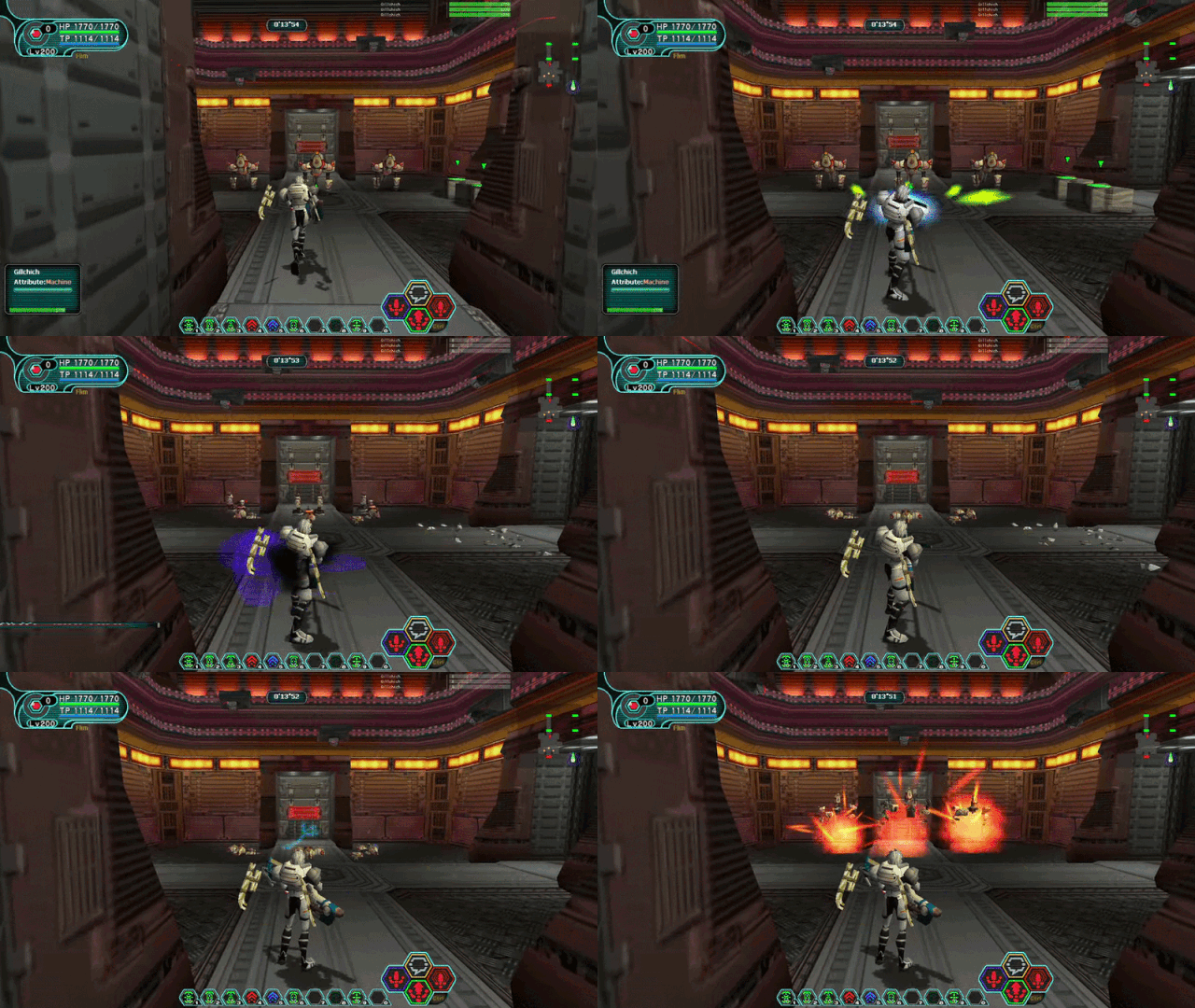
Some would just call this... playing the game. As you can see, I start my combo with S1, then I buffer S2 as soon as I can, and then I visually see that S1 had killed all the enemies after S2 was buffered. This resulted in me committing to S2, but not following through with S3. You will even see some people committing to S3 because, quite frankly, they don't know what to look out for, aren't paying attention, or just don't have much experience with the game.
The second type is really what I define as Proc Reaction. We simply take an action, and before we make the next action, we verify whether or not it proc'd.
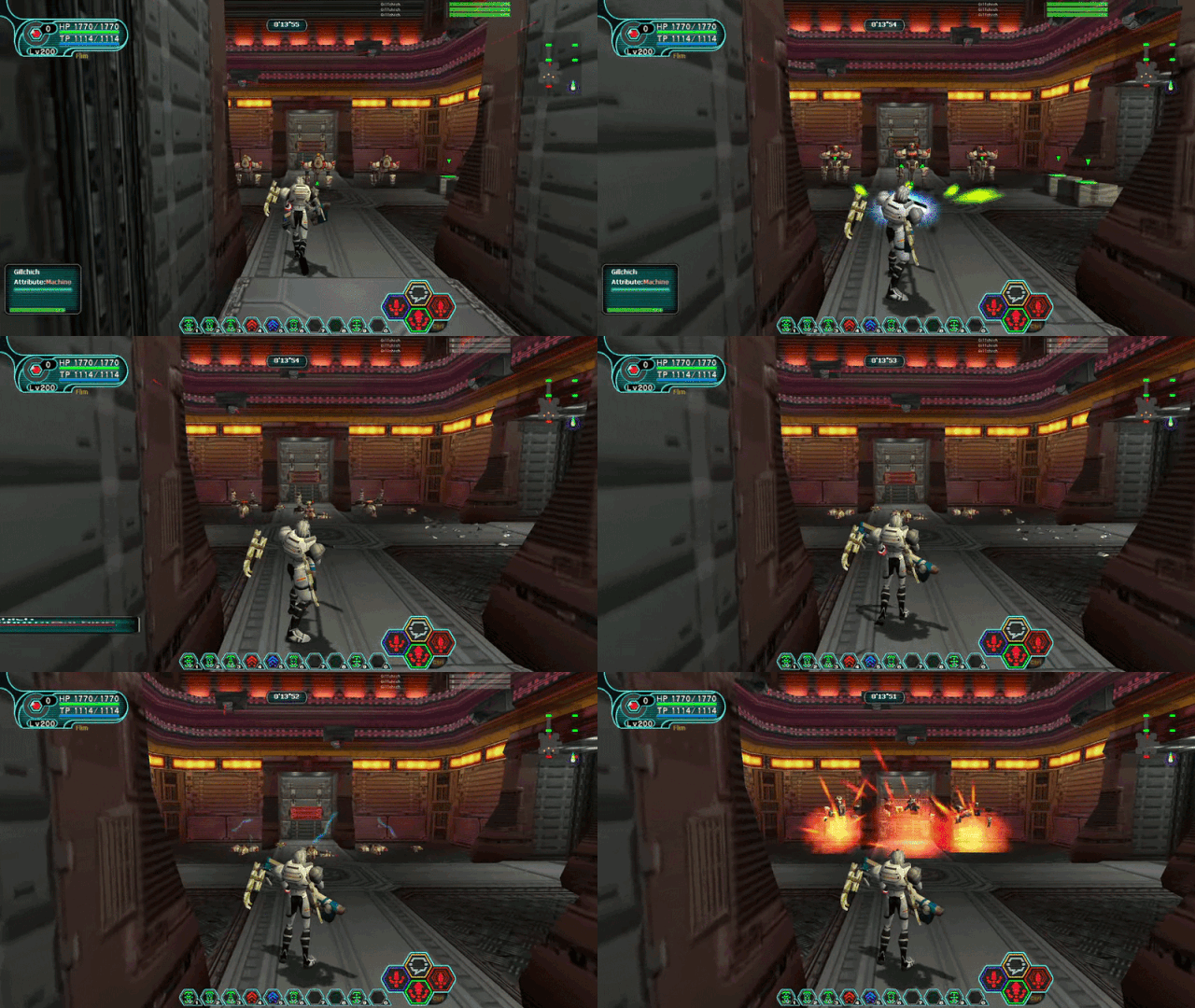
As you can see here, it worked great and saved a significant amount of time (24 frames or 0.8s) by not committing to an S2 with Shot. However there are two downsides to this method, the first that I want to quickly point out is that we will not gain from ATA glitching which may otherwise have improved odds of success. The more significant downside to this method is a little more involved. Let's move our reaction point to S2 instead of S1...
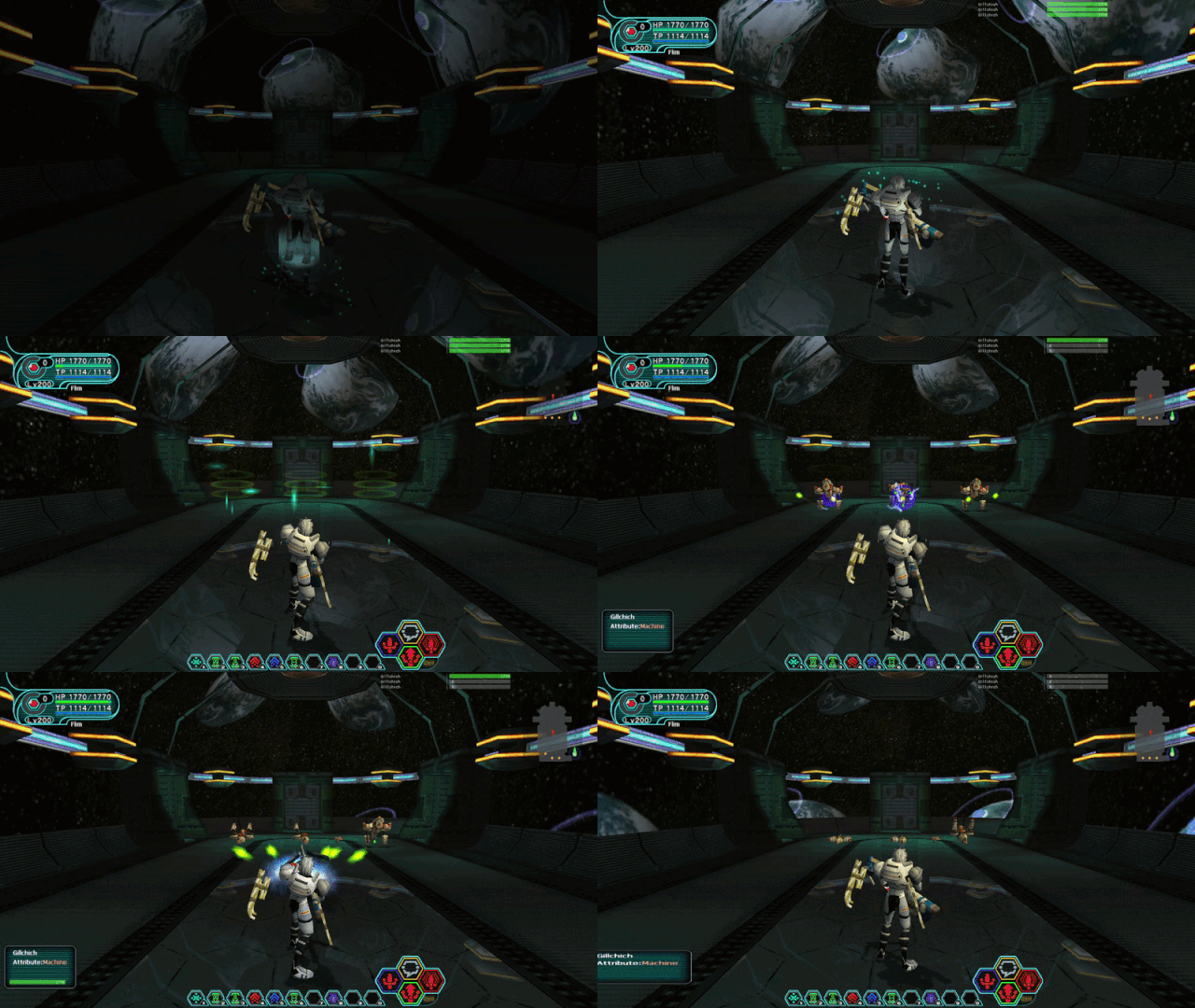
Since S2 did not give favorable results, we lost time by having to stagger our S3 instead of buffering it (I counted about ~9 frames of delay in the animation, but some of that could be saved with better reaction time). This is because by the time those projectiles even reach the enemies, we're only given ~3 frames (or 100ms) to react to the procs. In the case of S1->S2, the timing required for an input to occur before losing on frames is very lenient. The same is not true for S2->S3, wherein the timing is much tighter. Before we move on, let's change just one variable in the previous example.
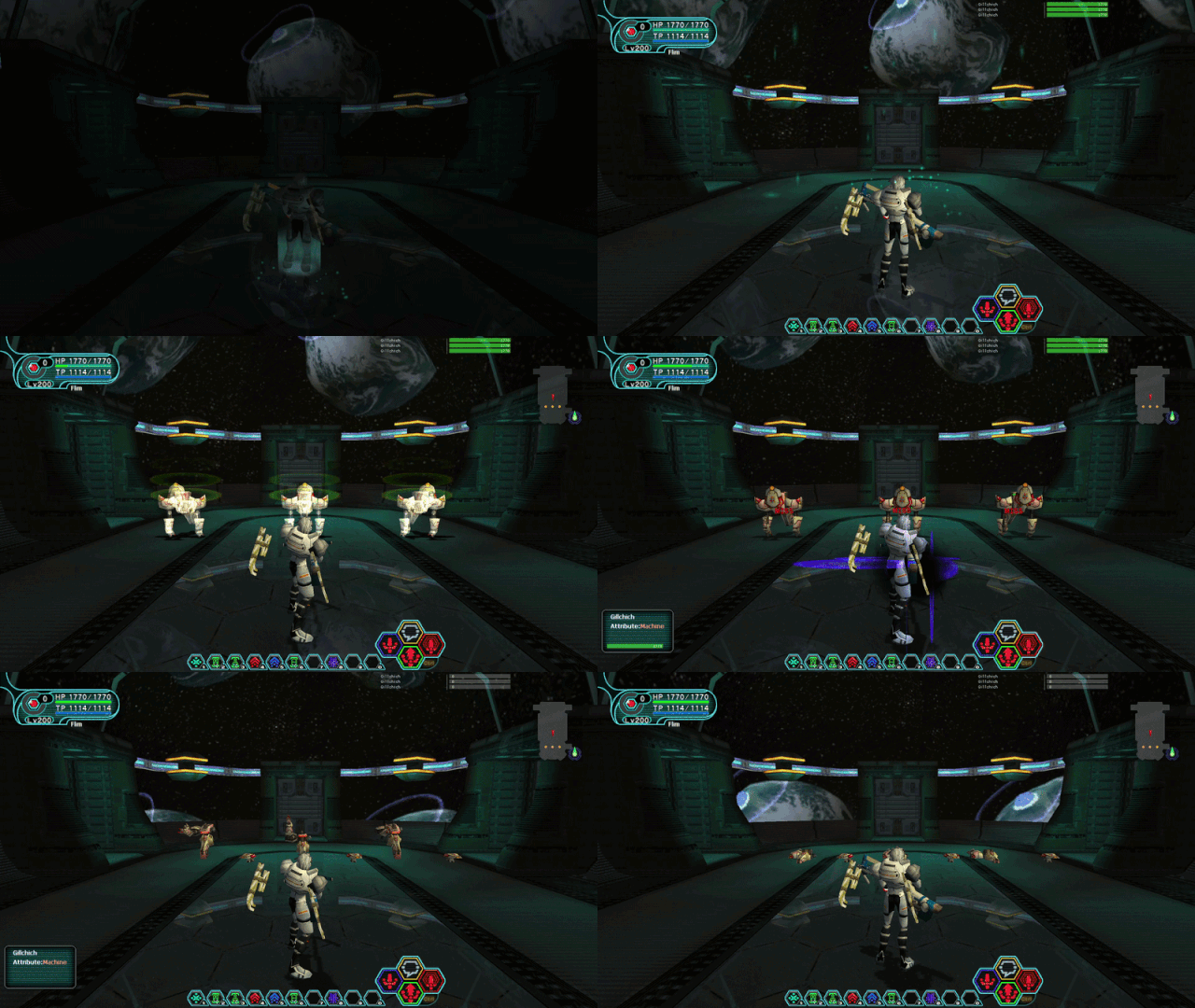
Now that the enemies are closer we get a different story. The projectiles reach their destination ~6 frames (or 200ms) before we're required to input without losing time. As long as we employ Proc Reaction in the correct scenarios, it serves as an excellent strategy which lets us engage with procs while losing minimal time.
Things start to get more difficult as we move away from hell and go to another form of proc: critical hits. Let's use a typical Caves scenario on RAmar with a sphered Charge Arms and Shifta 15.
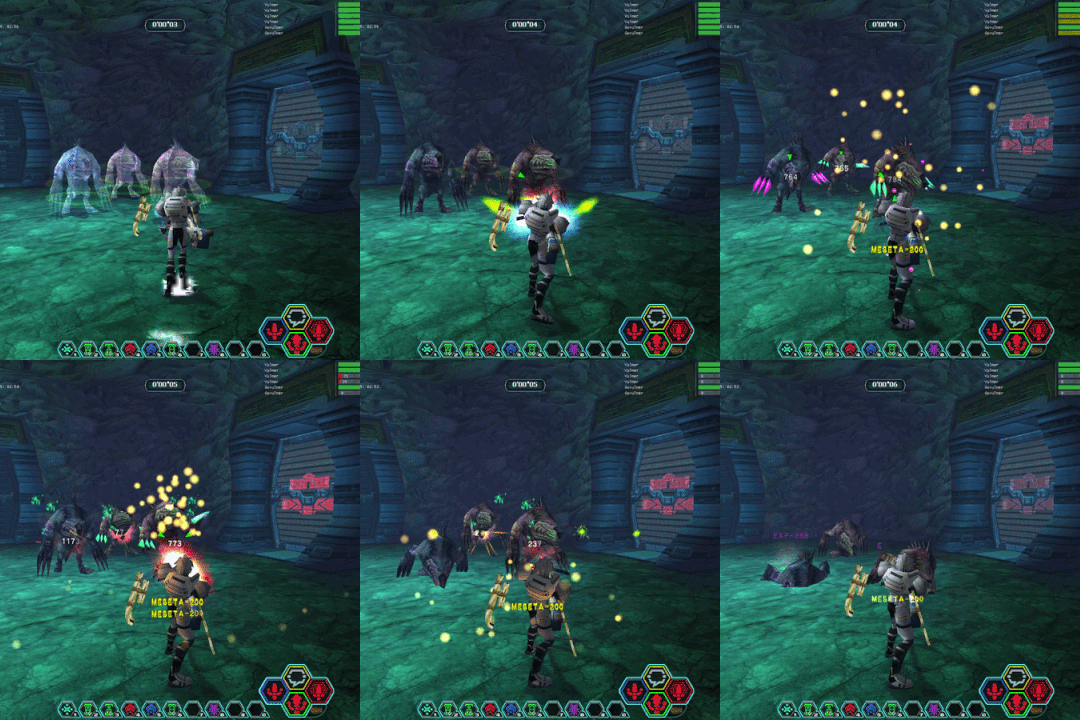
As you can see, in order for these enemies to die from charge arms in SS, it requires at least one crit on all targets, otherwise the combo will have to be SSN. Crits are harder to react to than hell particles because the cues are less distinguishable.
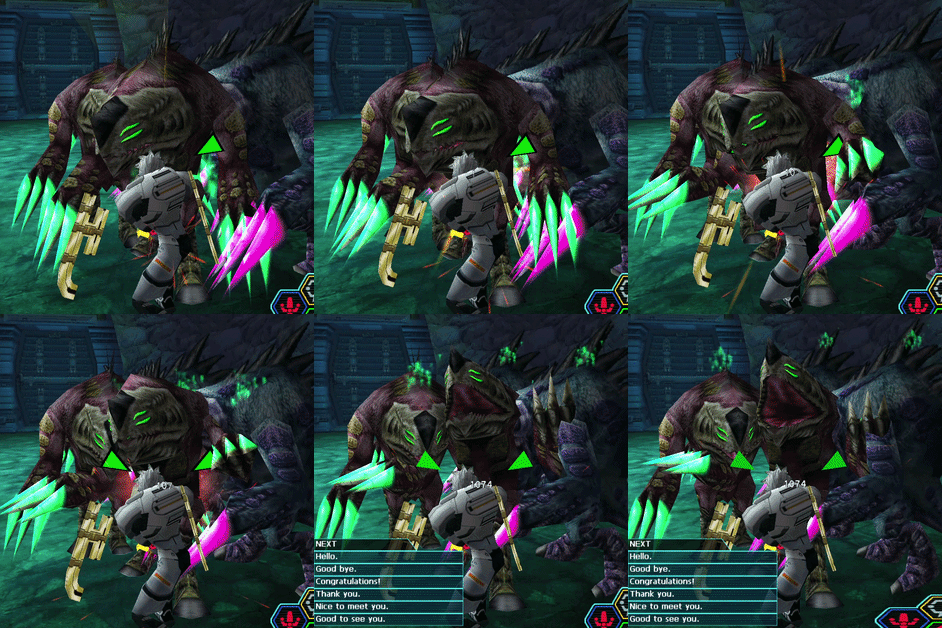
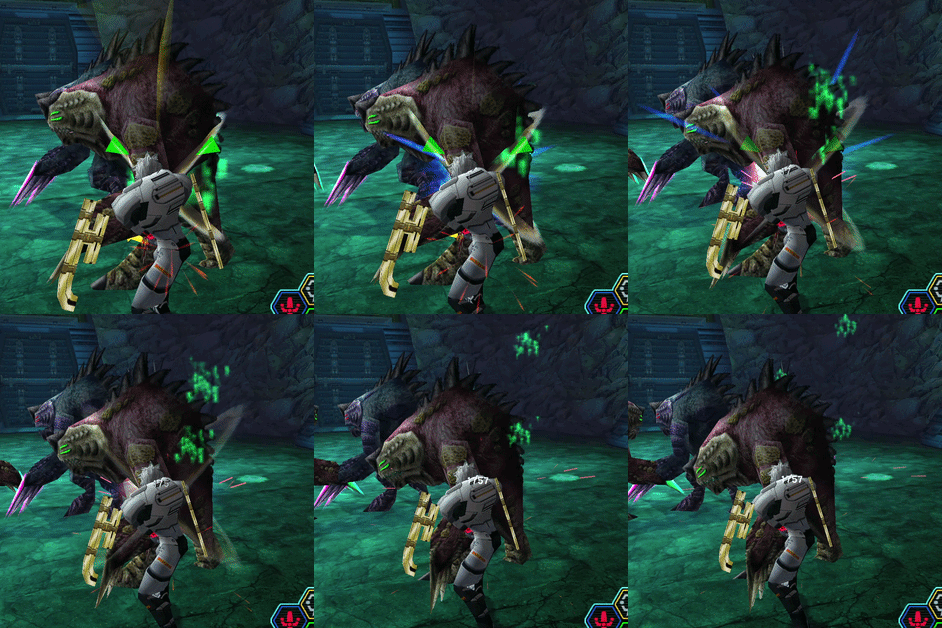
The left is the particle for a standard hit, and the right is the particle for a crit. As you can see, they use the same base particle. The main differences are that the standard particles are orange, while the crit particles are blue and are accompanied by a cross of halos. This helps crits stand out from standard hits, but they still use the same base shape of particles if we disregard the halos.
I find that the reason crits are harder to react to is because we have to compare them to a very similar base particle, while in the case of hell we only have to compare it toMISStext or the absence of a particle. It's worth mentioning I have trained myself to react to hell particles more than crit particles as a result of running a ton of spaceship solo.
But besides that, what else can we look at? Well, we could also look for the death animation of enemies, but we don't get that until the second hit in our Arms example. Let's first discuss more ways to react to crits on the first attack.

Yes, we can use LUA, and it works great. But not everyone uses LUA and memory reading might not always be legal to use in Time Attack. So what else can we do?
We can listen for the critical hit audio cue. I would have provided this as a .wav, but unfortunately neocities doesn't allow audio files. At first it may seem unintuitive to rely on audio since distinguishing between 1-4 crits and 5 crits audibly is quite difficult, but it starts to make more sense if we look at the solution from a deductive approach. If wedon'thear this sound, then that changes our attitude for the rest of the combo.
So what about S2 reaction? All of the above are still applicable, but in addition to that we can now attempt to look for death animationsandlisten for death sounds. So after utilizing all of the above cues, the same lessons from our Hell discussion earlier can be applied here as well.
This means that it's generally safer to Proc React for S1 but not for S2. Keep in mind this is just in regards to Shot, this will vary from projectile to weapon to distance and requires experimentation. With practice, Proc Reaction becomes natural and can be employed at will.
There is one more strategy I want to mention which I call Proc Reliance. This is the idea that no matter what, you're going for the best possible scenario, so you may as well commit to that one action as if it will work 100% of the time. So yes... it's not exactly reaction, unless you consider /lobby to be said reaction, but the reason I'm bringing it up at all is because it is a solution to the same problem that Proc Reaction is trying to solve.
Priming is a classic example of Proc Reliance. Most people prime because of the ATA factor as your combo step moves forward, but don't really consider that priming is typically going to be faster as well. With ranged weapons (excluding slicers), every combo step will be faster than the previous.
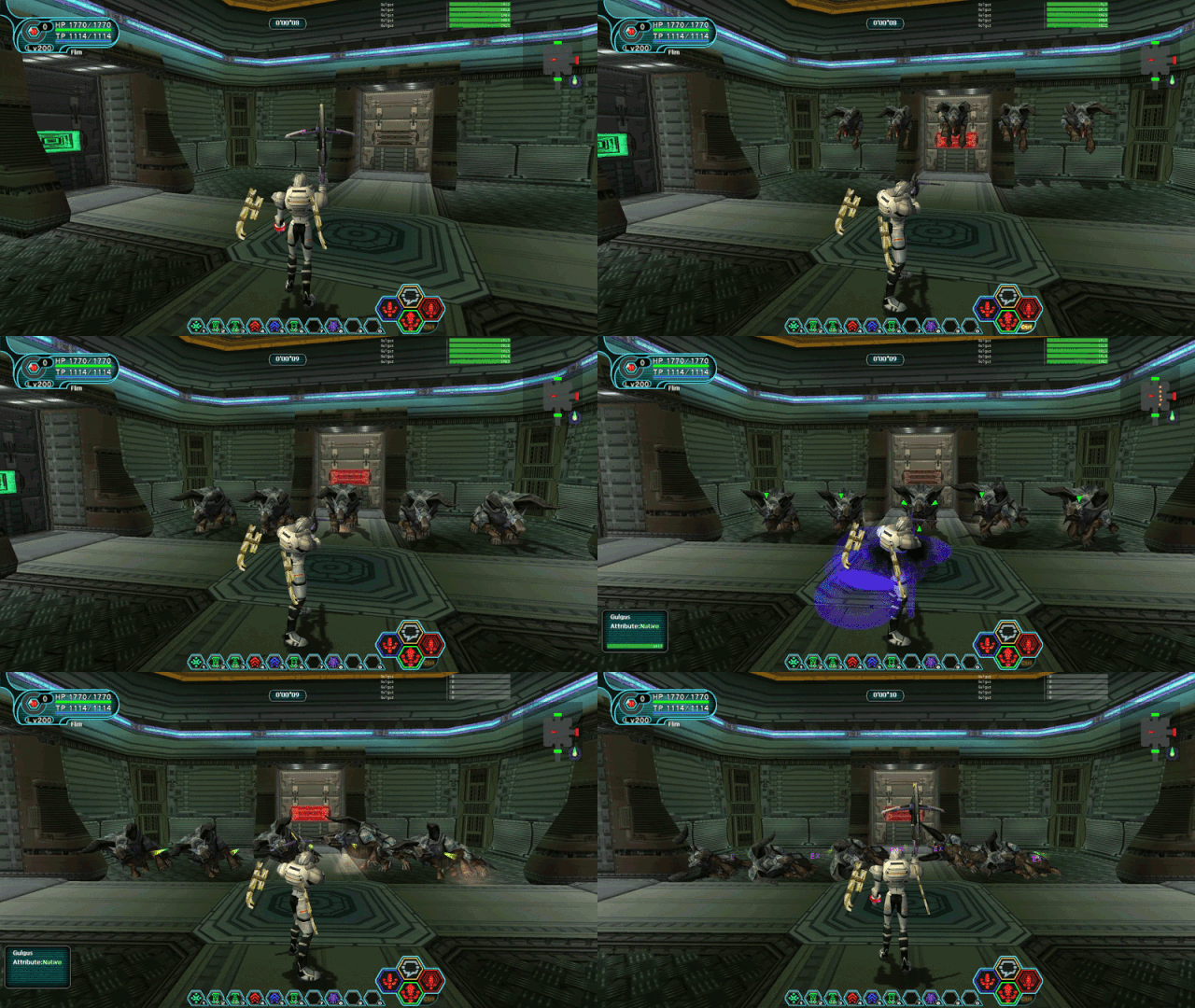
This means a primed third attack with ranged weapons will always be your fastest choice. And if it fails, it will have been a worse choice than just doing S2->S3.
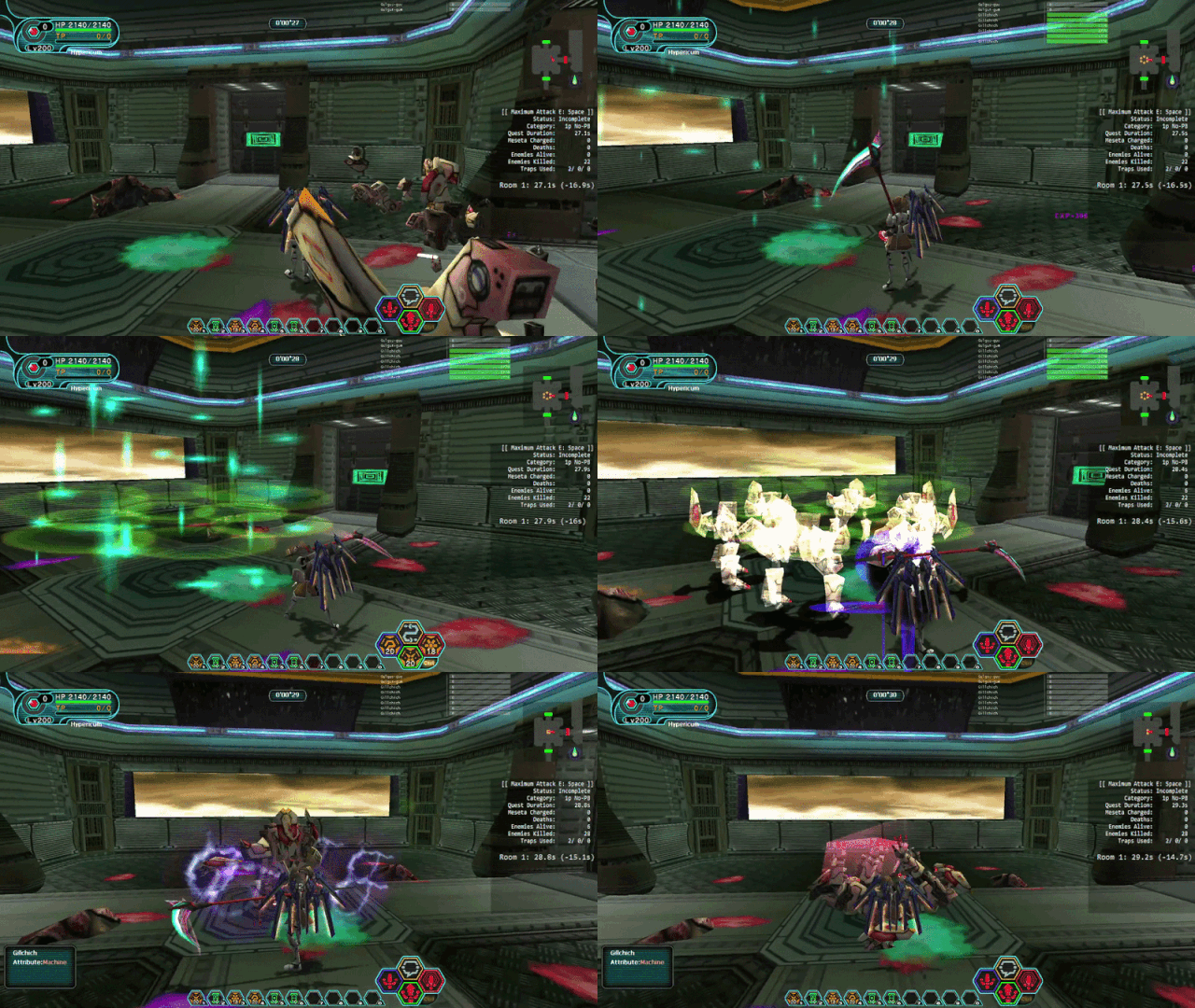
But this is not true for all melee weapons, where the fastest animations are typically the second combo step. But in both examples, we're utilizing Proc Reliance.
Backup strats should always be designed for Proc Reliance failure. The odds of getting 100% success rate on all proc reliant strategies in a run are not in our favor, and we don'tneedall implementations to be successful to find significant time saves.
TA can tie Proc Reaction and Proc Reliance together seamlessly. We can plan some spawns around reaction, and others around reliance, weighing potential time save against odds of success.
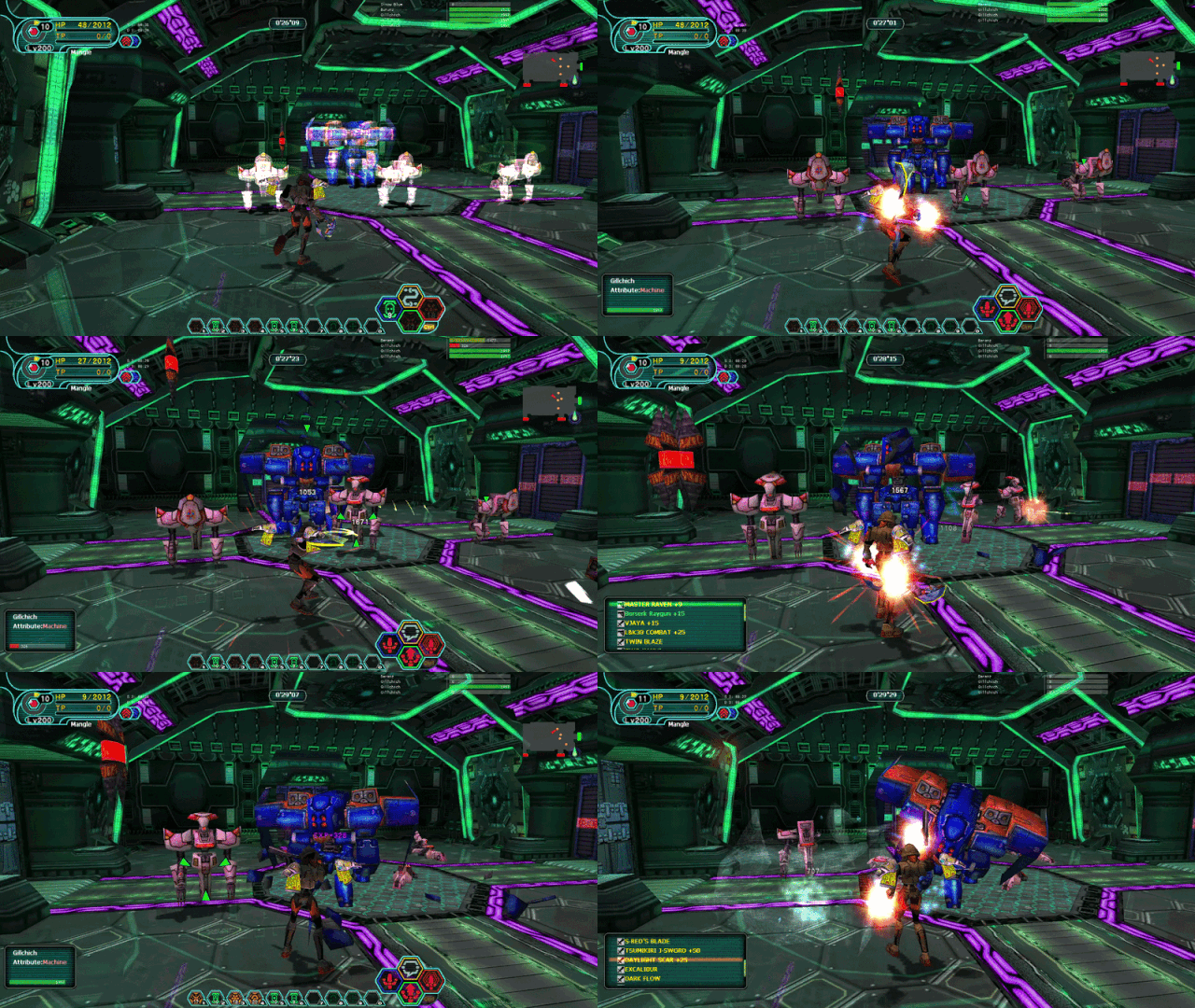
Some may get trapped in the mentality that in order for a run to be fully optimized, it must be completely and entirely planned around Proc Reliance. This is going to get you stuck on just about every run ever and make TA a miserable experience. You cannot deploy just one strategy, you must use all of them to your advantage. And even when you do use all of them, it is of upmost importance to remember that execution is not the only aspect of a run. You can have frame perfect execution and suffer through all the pains of resetting for little details over the course of months for a run, just to have it beaten within 24 hours by 10 seconds because someone outsmarted you.
Planning always beats execution because execution is always playing catch-up.
An Old Pastebin03/15/2026
The following post is one of my first write-ups about a player that I uploaded to pastebin back in 2019. Since it's so old, I've taken the liberty of updating some terminology and omitting certain elements, but for the most part it remains identical to the original post.
Keep in mindit being oldmeans that it does not reflect my current thoughts. I'm just posting it here for archival purposes. This is probably going to be the only post like this on here.
During the time when Sange was banned from Ephinea, I was an up and coming player who wanted to get better. I had a desire to get into TA after the anniversary event had ended, but came across the issue of no players who wanted to TA, and not many good players even wanting to log in.
Because Sange was banned, some great players had left Ephinea, others just felt no reason to play at all. This stagnant in players almost made me quit the game entirely. I chose to stick around though, and thankfully they got unbanned shortly after my decision. Now that they’re around I feel no reason to ever leave since I now have players around who have a drive to TA and are always willing to help me improve.
During his ban, Sange had been practicing hisPW4 TA on Unseen. Before he came back to Ephinea, the meta strat for pw4 used to be leaving one recobox alive on the top floor of first tower. This strat was used even in private games with good players, not just in pubs. When Sange made his return, he began to implement his strats into public games, and one such strat was to kill the recoboxes immediately and take on both spawns instead.
By doing this around players such as myself and others, he has taught us how to manage these spawns properly at a much quicker pace. Over time it has now become the meta and has significantly improved the average time for that room’s completion.
Just the other day I had seen on a stream that players were doing this, in a game neither of us were in. This shows to me that he has directly impacted the approach many players take to that quest.
Of course this is just one of many strats that have become meta in that quest because of him, it’s just the one I can recall easily. Another one I’m not entirely sure of would be scape retrapping between east and west tower. If I remember correctly, players used to nurse instead (not sure if this 100% of the case though)
Sange is also an incredibly adaptive player, more so than any other I’ve met.
In our games he has taken notice of my habits & playstyle and has adapted accordingly, whether its my spawn preferences or attack patterns, where I like to trigger, etc.
One of the most obvious of these adaptations would be his late DF swings to avoid DMC, most noticeable when we’re both on a Gibbles, but assuredly he does it on just about every spawn when we’re attacking the same target.
Other instances would be timing his mech/raygun shots around my DF swings (or other weapons for that matter)
An example would be the first Ill Gill in PW4. If we’re both using Twin Swords on it, he’ll time his attacks around mine so that there is no DMC. Given how often this has occurred, it is by no mistake or coincidence that he’s doing this intentionally.
When it comes to target selection (in the event of two players targeting the same one) he will tend to be the one to switch targets first/preemptively.
Because of how often we’ve played with each other, I’ve caught on to his adaptations and began practicing them myself. However this led to somedumb situations. One instance is where we both weren’t swinging DF because we were waiting for the other to swing first. Another would be both of us switching between the same targets because we thought the other would commit.
Although it was fun to practice the adaptations myself, I’m now aware that it is a mistake to do so when he is already the one adapting to me.